
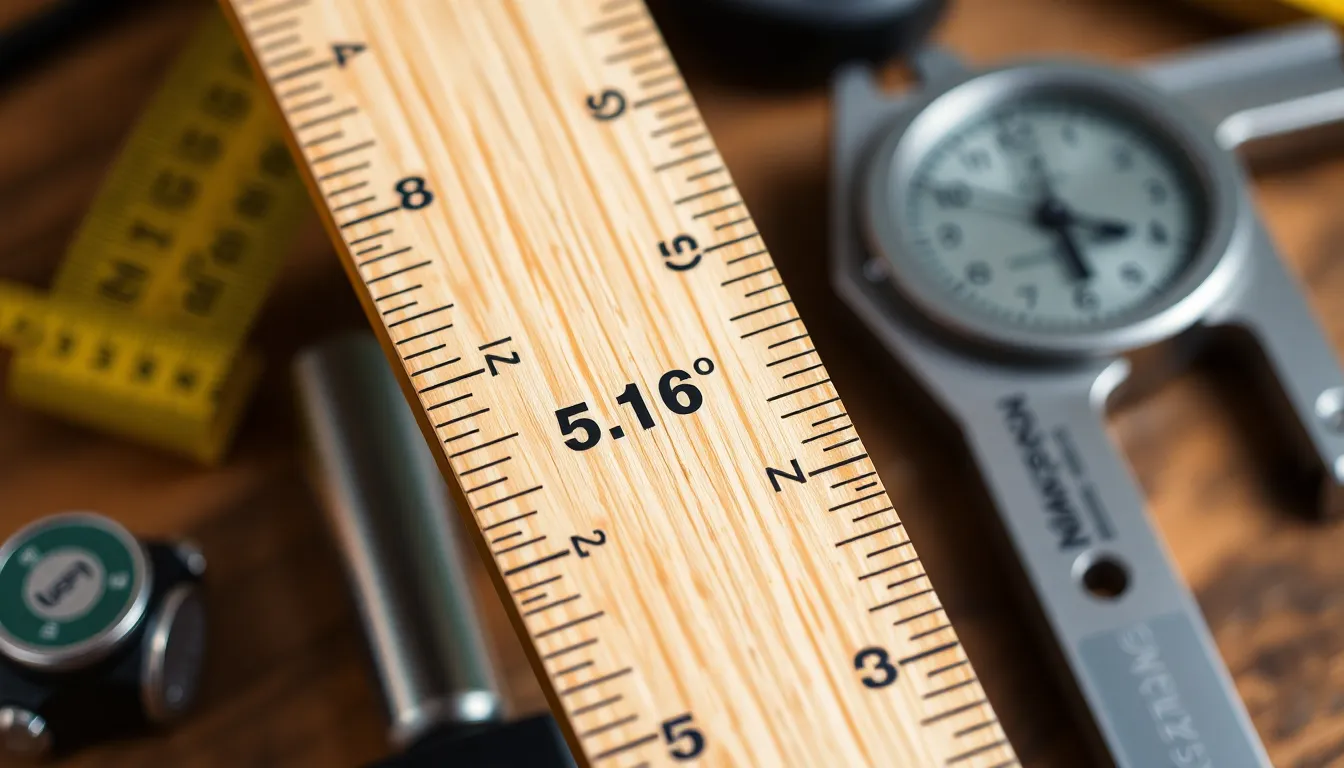
Understanding measurements can feel like deciphering a secret code, especially when it comes to fractions on a ruler. Enter 5/16—a fraction that’s both a hero and a villain in the world of DIY projects. It’s the tiny but mighty measurement that can make or break your next home improvement endeavor.
Understanding Measurements
Accurate measurements play a vital role in various projects, especially home improvements. Understanding fractions like 5/16 can eliminate confusion and lead to better results.
Importance of Accurate Measurements
Accurate measurements ensure precision in tasks. They directly impact the effectiveness of a project, whether hanging shelves or cutting materials. Miscalculations can create setbacks or additional expenses. For example, when installing cabinets, slight measurement errors can result in misalignment. Utilizing correct fractions enables proper fitting and reduces waste. Choosing to understand measurements, particularly 5/16, enhances overall efficiency and quality in DIY tasks.
Tools for Measuring Lengths
Various tools enhance measurement accuracy. Rulers, tape measures, and calipers each assist in different ways. Rulers serve well for short distances, while tape measures offer flexibility for longer spans. Calipers provide precision for smaller measurements, especially when fractions are involved. Additionally, digital measuring tools are becoming increasingly popular. These devices can display measurements to the nearest fraction, improving efficiency. Using the right tool minimizes mistakes and promotes confidence in achieving desired outcomes.
What is 5/16 on a Ruler?
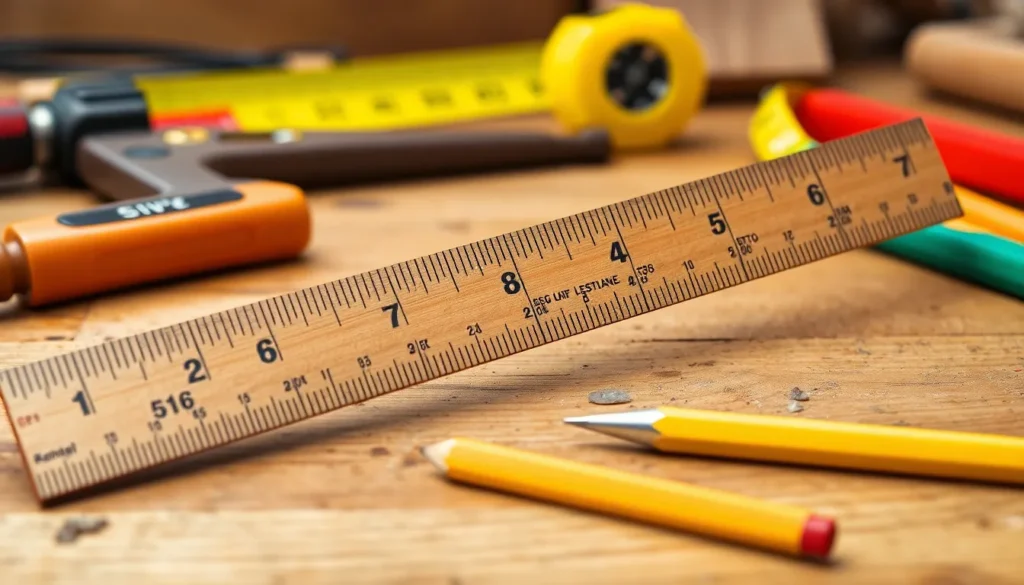
5/16 represents a fractional measurement commonly used in DIY projects and construction. Understanding this measurement aids in achieving accuracy, minimizing miscalculations during tasks.
Fractional Measurement Explained
Fractional measurements, like 5/16, divide a whole into equal parts. Specific examples include dividing an inch into 16 segments, where each segment equals 1/16 of an inch. Thus, 5/16 signifies five parts of these segments combined. This fraction illustrates the importance of precision, as even the smallest errors can lead to significant setbacks. He’s calculated dimensions more effectively when they include fractional measurements, ensuring a better fit during installations. Consequently, accurate measurement directly impacts the quality and success of projects.
Location on a Standard Ruler
Locating 5/16 on a standard ruler is straightforward. Each inch is divided into fractions where 5/16 lies between 3/16 and 1/4. Readers find it helpful to count four segments from the 1/4 mark to reach 5/16 precisely. Careful measurement ensures the right placement in carpentry or crafts, preventing costly mistakes. As users become familiar with the increments on their ruler, they’ll gain confidence in their measuring abilities. Recognizing this specific measurement not only enhances skills but also expedites project completion.
How to Read a Ruler Correctly
Reading a ruler correctly involves understanding how fractional increments work and being aware of common measuring mistakes. Mastering these aspects enhances accuracy in measurements.
Identifying Fractional Increments
Identifying fractional increments starts with recognizing the markings on the ruler. Each inch contains 16 smaller segments when using a standard ruler that measures in sixteenth increments. The numbers indicate whole inches, while the small lines between represent fractions. For example, 5/16 lies between 3/16 and 1/4. Counting each segment helps pinpoint precise measurements. Observing how many segments exist between the numbered lines increases confidence in reading the ruler. Therefore, awareness of these details plays a crucial role in accurate measuring.
Common Mistakes When Measuring
Common mistakes when measuring often stem from misinterpretation of the ruler’s markings. Many people overlook the importance of ensuring the ruler is flush against the item being measured. Inaccurate placement can add unnecessary distance to the final measurement. Some might also confuse fractions, mistakenly assuming 1/4 equals 4/16 due to a lack of familiarity with the fractions. Double-checking alignment and counting increments carefully mitigates errors. Keeping track of which line corresponds to the desired fraction ensures accuracy. Taking the time to verify measurements reduces the risk of costly miscalculations.
Practical Applications of 5/16 on a Ruler
5/16 on a ruler plays a vital role in various activities. Understanding this measurement enhances accuracy and confidence in multiple contexts.
DIY Projects
Common household projects often require precise measurements. Many DIY enthusiasts use 5/16 when installing shelves or cabinets. This fraction allows for careful fitting, preventing misalignment. Makers consistently obtain better results by ensuring accurate measurements during construction. Accurate cuts lead to improved aesthetics, creating a polished final look for any project. Repeatedly referencing 5/16 fosters better understanding of fractional divisions, leading to consistent and successful outcomes in home improvements.
Crafting and Construction Uses
In crafting, 5/16 frequently appears in smaller scale items. Many crafters use this measurement to ensure proper alignment of components. It aids in creating uniform designs and enhancing overall project quality. Carpenters often reference 5/16 in furniture assembly, providing precision for joint fittings. Utilizing this fraction in construction ensures stability and durability in built pieces. Designers and builders recognize the importance of precision, making 5/16 an essential measurement in the crafting and construction fields.
Mastering the measurement of 5/16 on a ruler is essential for anyone engaged in DIY projects or crafting. This fraction plays a significant role in ensuring precision and accuracy which directly influences the success of various tasks. By understanding how to locate and utilize 5/16 effectively, individuals can enhance the quality of their work and avoid costly errors.
Emphasizing careful measurement techniques and recognizing common pitfalls will lead to improved outcomes. Whether it’s for installing cabinets or creating intricate designs, knowing how to read and apply measurements like 5/16 is a valuable skill that can elevate a project from good to great. With practice and attention to detail, anyone can achieve consistent results and satisfaction in their home improvement and crafting endeavors.