

Imagine waking up to the smell of freshly brewed coffee, with your curtains gently drawing back to reveal a beautiful sunrise—all without lifting a finger. Welcome to the world of home automation technology, where your home becomes a smart assistant that anticipates your every need. Gone are the days of fumbling for light switches or manually adjusting the thermostat. Now, your home can do it all while you kick back and relax.
Overview of Home Automation Technology
Home automation technology involves integrating devices and systems to enhance convenience and efficiency within a residence. Smart devices connect through a network, enabling users to control functions from anywhere.
Significant features include smart lighting, which adjusts based on occupancy, and automated temperature controls that optimize energy use. Customers often enjoy voice-activated assistants that streamline tasks. These systems respond to simple commands, allowing for hands-free operation.
Security is another critical aspect. Smart cameras and alarms provide real-time alerts, allowing homeowners to monitor their property remotely. Sensors enhance safety by detecting motion or unusual activity.
Compatibility with various platforms sets home automation apart. Many products work together seamlessly, promoting interoperability across different brands. This flexibility lets individuals customize their systems according to personal preferences.
Data analytics play a role in home automation as well. Systems analyze usage patterns, enabling homeowners to make informed decisions about energy consumption or device scheduling. This capability leads to improved efficiency and potential cost savings.
User-friendly interfaces facilitate easy control. Mobile apps or touchscreens on smart hubs allow individuals to manage multiple devices effortlessly. The simplicity of interaction contributes to a more enjoyable user experience.
As technology evolves, home automation continues to expand. Innovations in artificial intelligence and machine learning enhance device responsiveness. Future developments may further simplify automation, making smart homes even smarter.
Benefits of Home Automation Technology
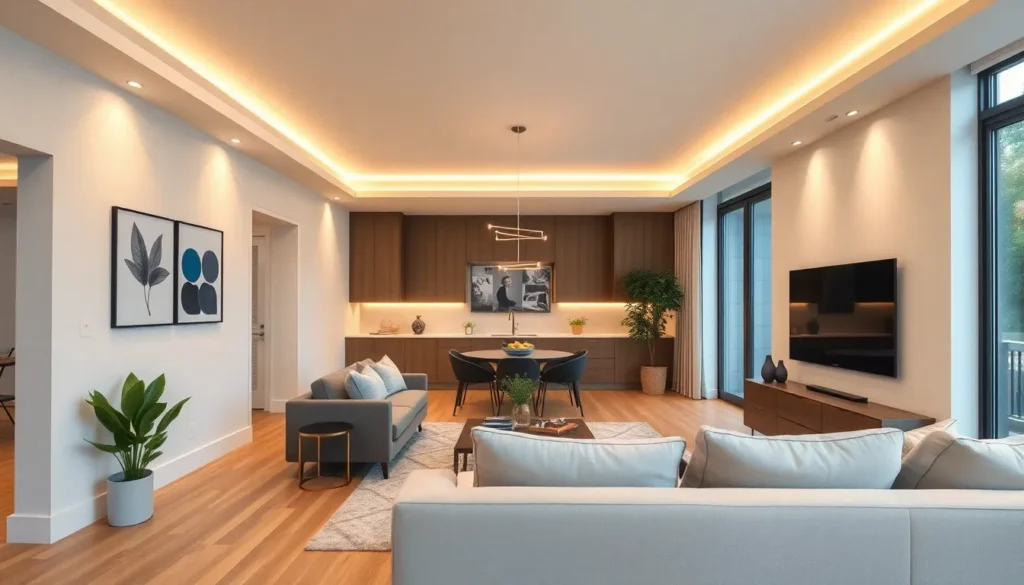
Home automation technology offers various advantages that enhance daily living. Users experience greater peace of mind, increased energy efficiency, and improved comfort.
Enhanced Security
Security systems integrated with home automation technology boost safety for residents. Smart cameras and motion detectors provide real-time alerts, enabling immediate responses to potential threats. Remote monitoring allows users to check on properties from anywhere through mobile devices. Automated lighting can create the illusion of occupancy, deterring intruders. Additionally, smart locks give homeowners control over who enters their homes, contributing to overall safety.
Energy Efficiency
Energy efficiency becomes a reality with home automation technology. Smart thermostats optimize heating and cooling based on occupancy patterns and personal preferences, significantly reducing energy consumption. Residents can schedule lighting to turn on only when needed, minimizing electricity waste. Smart plugs allow users to monitor and control energy usage by turning off devices remotely. Data analytics provide insights into energy patterns, enabling informed adjustments for further savings.
Convenience and Comfort
Convenience and comfort greatly improve through home automation. Homeowners can operate devices with voice commands or mobile apps, simplifying daily tasks. With automated routines, mornings can begin effortlessly, such as brewing coffee or dimming lights upon waking. Smart speakers can curate entertainment options according to preferences, enhancing relaxation time. Overall, this technology integrates seamlessly into lifestyles, creating a more enjoyable living space.
Types of Home Automation Systems
Home automation systems fall into various categories, each designed to enhance convenience and efficiency. Understanding these types allows homeowners to select which best suits their needs.
Smart Lighting
Smart lighting systems enable users to control brightness and colors remotely. Automated schedules can adjust lighting based on occupancy, providing energy savings. Motion sensors detect presence, activating lights when needed. Voice commands often control these systems, allowing for hands-free operation. Various apps make it easy to set scenes, like creating a relaxing ambiance or securing a space by turning on lights at night.
Smart Thermostats
Smart thermostats learn user behavior and adjust temperatures accordingly. Energy-efficient features optimize heating and cooling based on occupancy patterns. Remote access through apps allows users to change settings while away, contributing to reduced energy bills. Integration with other smart devices enhances functionality, such as adapting temperatures before arriving home. These systems also provide detailed usage reports, helping homeowners understand their energy consumption.
Home Security Systems
Home security systems provide a comprehensive approach to safety. Smart cameras monitor properties in real-time, sending alerts directly to users’ devices. Motion detectors enhance surveillance, ensuring prompt notification during unusual activity. Integration with smart locks allows users to control home access from anywhere. Many systems store video footage in the cloud, offering an additional layer of protection and peace of mind.
Challenges and Considerations
Home automation technology presents several challenges and considerations for potential users. Cost can vary significantly, requiring careful budget evaluation.
Cost Factors
Installation and equipment expenses often represent the first hurdle. Smart devices, like lighting and thermostats, range from $30 to $300 each, and costs can escalate depending on the scale of the system. Professional installation may add another $100 to $500, depending on complexity. Considering additional expenses for maintenance and upgrades is also essential for long-term budgeting. Users often face unexpected costs if devices become obsolete or incompatible with new systems.
Compatibility Issues
Device compatibility may pose significant challenges. Not all smart devices communicate seamlessly with various platforms, leading to potential frustration for users. Brands such as Google, Amazon, and Apple often have exclusive ecosystems that limit interoperability. Checking device specifications before purchasing can prevent compatibility issues later. Navigation within multiple apps for control can lead to user confusion and reduced satisfaction. Ensuring that devices work together optimally becomes crucial for a smooth home automation experience.
Privacy Concerns
Data privacy represents a primary concern for many users. Smart devices collect vast amounts of personal information, which can be vulnerable to data breaches or hacking attempts. Using secure networks and regularly updating device firmware increases protection against unauthorized access. Users may feel uneasy about sharing data with manufacturers or third-party apps. Reading privacy policies and understanding data storage practices is vital before integrating devices into personal spaces. Regularly reviewing privacy settings can help maintain control over personal information.
Future Trends in Home Automation Technology
Emerging trends in home automation technology promise to enhance connectivity and efficiency. Integration of artificial intelligence (AI) continues to shape how devices operate, allowing for increased customization and learning capabilities. Homeowners benefit from AI-driven systems that predict user behavior, adapting settings automatically for comfort and convenience.
Another significant trend focuses on energy management. Smart home devices now include advanced energy monitoring features. These systems help track energy consumption in real-time, enabling users to identify patterns and make data-informed decisions. The implementation of energy-saving modes further optimizes usage, resulting in potential savings.
Voice control functionality expands every year. Natural language processing improvements allow users to interact with smart devices more intuitively. Commands now accommodate conversational phrases, simplifying user interaction.
Integration of security features also evolves rapidly. Enhanced smart cameras and locks provide more robust protection for homes. Users receive immediate alerts about unusual activities and can monitor their homes remotely from mobile devices, ensuring peace of mind.
Interoperability between devices becomes increasingly important as well. More manufacturers are endorsing open standards for compatibility, promoting seamless integration across platforms. This shift enables homeowners to mix and match devices, creating personalized smart ecosystems that function harmoniously.
Sustainability emerges as a core focus of future home automation. Systems designed to reduce energy consumption contribute to environmentally friendly living. Smart devices aimed at resource conservation support eco-conscious homeowners in their goals to lessen environmental impact.
Overall, responsiveness of home automation technology significantly boosts convenience. Continuous innovations promise to keep improving functionality, creating more user-friendly environments. Homeowners can expect smarter homes that enhance their quality of life.
Home automation technology represents a significant leap forward in how individuals interact with their living spaces. By integrating smart devices and systems, homeowners can enjoy unprecedented convenience and efficiency. The ability to automate daily tasks enhances comfort while promoting energy savings and security.
As advancements continue to unfold, the potential for personalized experiences grows, allowing users to tailor their environments to fit their unique lifestyles. With a focus on sustainability and improved interoperability, the future of home automation looks promising. Embracing this technology not only simplifies life but also paves the way for smarter, more efficient homes.

