
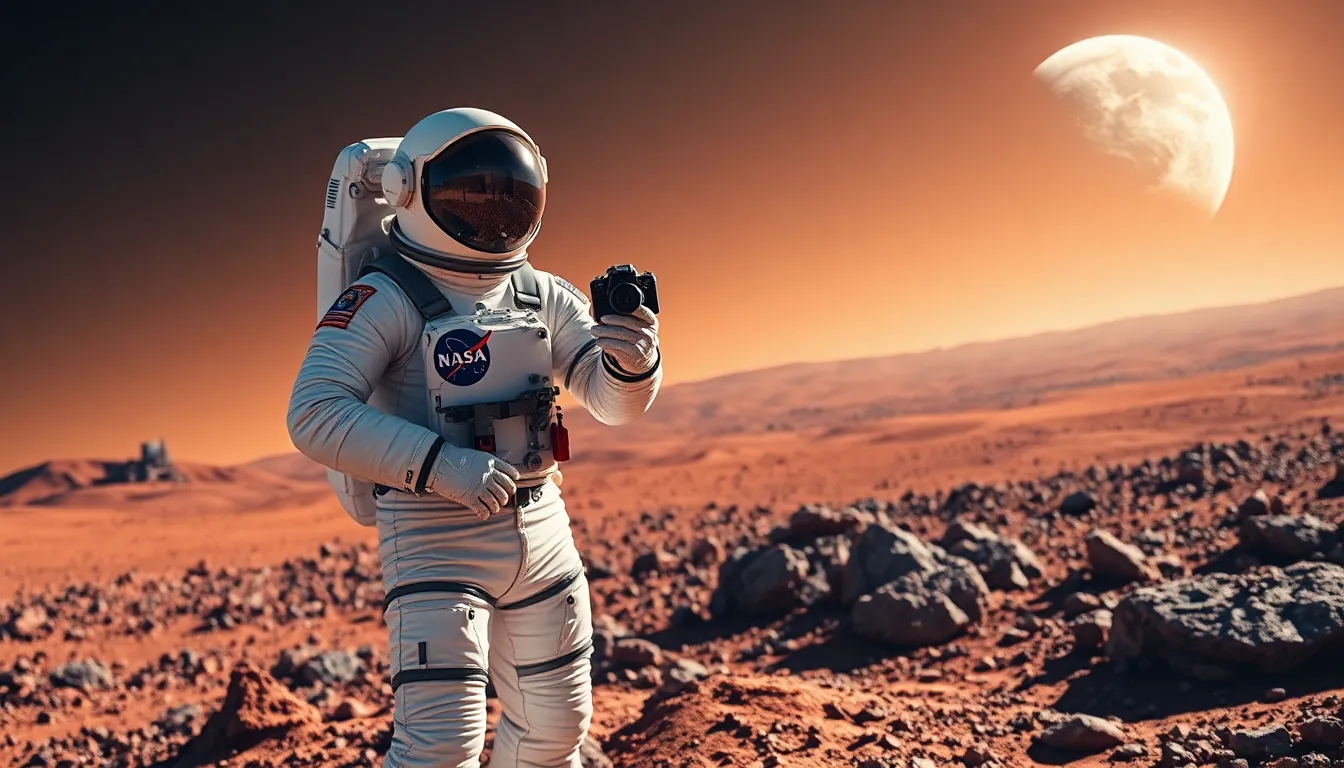
Imagine a world where humans casually sip coffee on Mars or take selfies with Saturn’s rings in the background. Planetary exploration isn’t just a sci-fi dream; it’s a thrilling adventure that’s unfolding right now. With cutting-edge technology and daring missions, our quest to understand the cosmos is more exciting than ever.
Overview of Planetary Exploration
Planetary exploration encompasses the study of celestial bodies, including planets, moons, asteroids, and comets. Missions conducted by space agencies like NASA, ESA, and ISRO have led to groundbreaking discoveries. These efforts contribute to understanding planet formation and the potential for life beyond Earth.
Robotic spacecraft, such as rovers and orbiters, have greatly enhanced our knowledge. Mars rovers, for instance, analyze soil samples and search for signs of ancient water. Data collected from these missions helps scientists form hypotheses about climates and geological processes on distant worlds.
Human exploration plans often focus on Mars as the next target. NASA’s Artemis program aims to return humans to the Moon, serving as a stepping stone for future Mars missions. Developing sustainable habitats on the Moon will provide valuable experiences for longer-duration space travel.
Recent missions also target asteroids. The OSIRIS-REx spacecraft successfully collected samples from Bennu and plans to return them to Earth in 2023. Scientists study these samples to understand the building blocks of planetary bodies and the early solar system.
Collaborative international efforts continue to grow. Projects like the Mars Sample Return mission involve teamwork among various countries to bring back Martian soil. Sharing resources and expertise accelerates advancements in space exploration.
Technological innovation drives these explorations. Advanced imaging and communication systems enhance real-time data transmissions from distant locations. Innovations in propulsion and life support systems pave the way for longer missions.
Exploring the cosmos signifies humanity’s quest for knowledge and discovery. Scientists utilize findings to answer fundamental questions regarding existence and the universe’s nature. As exploration progresses, so does the quest to unravel the mysteries beyond Earth.
Historical Milestones in Planetary Exploration

Planetary exploration has a rich history, marked by significant milestones that shaped our understanding of the solar system. Each mission built upon the last, pushing technological limits and expanding scientific horizons.
Early Missions
Pioneering efforts began in the 1960s with missions like NASA’s Mariner series. Mariner 4 successfully flew past Mars in 1965, capturing the first images of the Martian surface. Following this, Mariner 9 orbited Mars in 1971 and provided detailed maps, revealing a complex landscape. The Soviet Luna program made strides as well, with Luna 2 impacting the Moon in 1959, marking humanity’s first contact with another celestial body. These foundational missions laid the groundwork for future exploration and ignited curiosity about the cosmos.
Notable Discoveries
Notable discoveries emerged from various missions that expanded our knowledge of planetary environments. Voyager 1 and 2, launched in 1977, provided groundbreaking data about the outer planets and their moons. They revealed the presence of active volcanism on Jupiter’s moon Io and detailed the rings of Saturn. The Mars rovers, including Spirit and Opportunity, uncovered evidence of past water, prompting a reevaluation of Mars’ potential for hosting life. More recently, the OSIRIS-REx mission returned samples from asteroid Bennu, offering insights into the solar system’s formation. Each discovery deepens understanding and inspires continued exploration.
Current Missions and Technologies
Planetary exploration actively engages scientists and engineers in their quest for new discoveries. Recent missions exemplify humanity’s drive to explore our solar system.
Mars Rovers
NASA’s Perseverance rover landed on Mars in February 2021, showcasing advanced tools designed for astrobiology and sample collection. Curiosity continues its exploration, analyzing Martian rocks and assessing the planet’s climate. Rovers equipped with high-resolution cameras and spectrometers gather data, sending back images that spark excitement and curiosity. These advancements enhance understanding of Mars’ geology and history as well as its potential to support life.
Lunar Exploration
The Artemis program aims to return humans to the Moon, focusing on sustainable exploration. Orion spacecraft carry astronauts beyond low Earth orbit, targeting the lunar South Pole. Robotic missions like the European Space Agency’s lunar lander provide critical data on resources, while commercial partners contribute technology for lunar surface operations. These efforts set the stage for future Mars missions and foster collaborative international projects that enhance exploration goals.
Future of Planetary Exploration
Planetary exploration is on the brink of significant advancements, driven by innovative missions and cutting-edge technology.
Upcoming Missions
Numerous missions are slated for launch, aiming to expand knowledge of celestial bodies. NASA’s Artemis missions target lunar returns and pave the way for Martian exploration. The Mars Sample Return mission involves collaboration between NASA and ESA, focusing on bringing back rock samples to Earth. Additionally, missions like China’s Tianwen-2 aim to explore asteroids for valuable scientific insights. Upcoming launches, including Japan’s MMX mission to Phobos, further illustrate the global commitment to exploring and understanding the solar system.
Innovations in Technology
Technological advancements play a crucial role in the future of planetary exploration. Autonomous systems enable rovers to navigate complex terrains on Mars more effectively. New propulsion methods, such as ion propulsion, reduce travel time between planets. Communication systems improve data transfer speeds, facilitating real-time analysis and decision-making. Moreover, advanced robotics enhance sample collection, allowing greater efficiency in gathering specimens from diverse environments. These innovations exemplify humanity’s drive to push boundaries and unlock the mysteries of the cosmos.
Challenges and Considerations
Planetary exploration faces numerous challenges that must be navigated for successful missions.
Budget Constraints
Funding remains a significant obstacle for space agencies. NASA’s annual budget influences the scope and number of missions. Constraints can limit research opportunities and technological advancements. Partners in space exploration often share costs to optimize resources. Collaboration among international agencies helps manage expenses, yet fiscal pressures persist. A clear prioritization of mission objectives is essential for effective allocation of existing funds. Underfunded programs may result in reduced mission capabilities and extended timelines.
Ethical Implications
Ethical concerns arise from planetary exploration activities. Potential contamination of celestial bodies poses risks to scientific integrity. The introduction of Earth-based organisms could disrupt native ecosystems on other planets. Ensuring data and samples collected from otherworldly environments remain unaltered is a priority for researchers. Balancing scientific pursuits with ecological considerations fosters responsible exploration practices. Discussions regarding ownership and exploitation of extraterrestrial resources necessitate transparency and cooperation among nations. Addressing these ethical implications fosters a commitment to sustainable exploration and respect for the cosmos.
Planetary exploration stands as a testament to human ingenuity and curiosity. As missions evolve and technology advances, the potential for groundbreaking discoveries grows. The commitment to understanding celestial bodies not only enriches scientific knowledge but also inspires future generations to look beyond Earth.
With collaborative efforts and innovative approaches, humanity is poised to unlock the secrets of the universe. The challenges faced are significant but manageable through cooperation and ethical considerations. As exploration continues, it reinforces the importance of sustainable practices and respect for the cosmos. The journey into space is just beginning, and the excitement of what lies ahead is undeniable.

